The game is divided into two modes, "realized space" and "abstract space". Realized space is what you see, abstract space is a sort of gross simplification of the game, reduced to basically board game rules, where each room is divided into a few "nodes" that simple representations of creatures occupy and interact in.
Abstract space exists to make the world feel alive. Because of the processes in abstract space, you don't need to move to creatures to "unfreeze" them, they move around in the world according to their own whims and needs, and you might encounter them at any place. Also it keeps track of stuff to make the world feel consistent - stuff such as what creatures are where, what damage state they're in, etc etc. Basically it is intended to create the experience that the entire world is up and running at the same time.
At one point I thought that the entire world was going to be about 100 rooms, and then I entertained the idea of having abstract space loaded for the entire world at once. Now that James has gotten started on the regions though, it turns out that a single region is more or less the size we anticipated the entire world to be. We did a test where we tried to put 4 regions together into one super-region and run it all in abstract space. It worked, but with really bad performance - and we have at least 12 regions planned.
So that's why I'm thinking of loading and unloading the regions from abstract space. I like the abstract space stuff, but mostly because of principle - it's sort of a simulationist element to the game. Performance, ie the game being able to actually run, is more important. Still I'm not too bummed about it, because if a 60 room region is up and running that is about the scope of simultaneously simulated space that I originally set out to do! The reason why I'm doing the abstract space system is because I want you to be able to follow a creature and see it go about its day, or have a creature follow you. The principal thrill of knowing that a lizard 230 rooms away is actually being simulated is less important than the actual game experience.
This said, if I go with the loading/unloading solution I'll still
have to simulate some sort of creature movement in the unloaded areas as well... Because when you enter a region, it won't do that all creatures are just popping out of their dens even if you're halfway through a rain cycle. So for that reason, when you go through an area gate the region that is loaded will probably go through some sort of sped-up, simplified version of the standard abstract space simulation, to place creatures in believable positions throughout the region. The same process could be run on all regions during hibernation, so that populations will affect each other etc.
Don't worry about this stuff not being actually simultaneous as the realized rooms, ordinary abstract space isn't either

For this stuff I basically just save what time it was when the abstract entity was last updated, and on the next update weigh that into the simulation.
This means that effectively, the game will be divided into three modes rather than two. "Realized space simulation" - the stuff you see on screen, "Abstract space simulation" - the rest of the region you're in, and "Super abstract space simulation", the other regions. This basically means that the game is simulated at different resolutions, and the resolution gets higher close to the player - but the game is still to some degree running everywhere else as well.
So the individual creatures of the world (which will likely be in the thousands) will all consistently exist, they'll do stuff, and you'll be able to find them again (unless they got eaten) but the further away from you they are the more crude the simulation of whatever they're doing will be. Loading and unloading regions is mostly a technical issue, the implications for your actual gameplay experience is likely not going to be large. With the exception that you'll have to go through gates in order to move between regions - but the gates was part of the design even before because we want them to cover up the palette changes, so that's not really a change per se.
As for fleeing out of a region to avoid a creature, that's not really a viable option because the gate rooms have gates, and you don't want to spend 20 seconds in a tight airlock with a vulture! Also, creatures that are with you in the airlock should be moved to the next region, we need that for other reasons as well (ie pups). On top of that, the regions are large, so it's probably only in about 5% of the time you're actually close enough to a region gate for it to be an option. And if you still somehow manage to pull a move like that the gain is not much larger than a standard situation where you manage to go to a new room within the region and have a predator lose you - in common rain world fashion it's most likely to be out of the frying pan into the fire, with some other beastie waiting for you in the new room you arrive in.
 —
— 
 So yeah but no, I won't spend time slimming the level editor, I'll just make it do what we need it to do and then learn my lesson for the next project.

 You guys really are something else. The speed at which new and important features come through for this project is absolutely amazing.


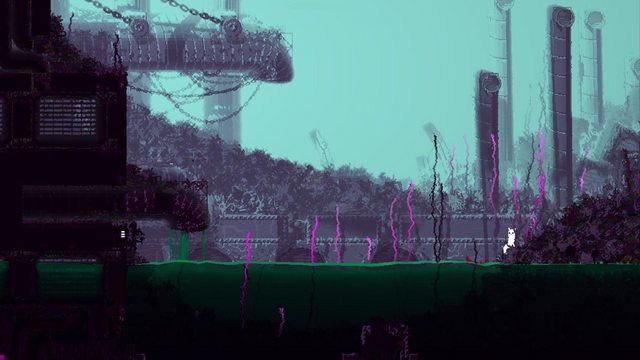
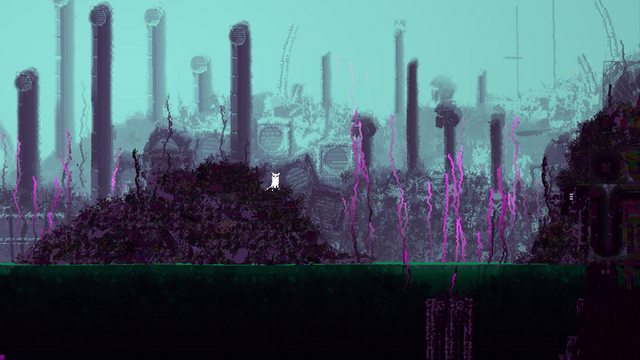
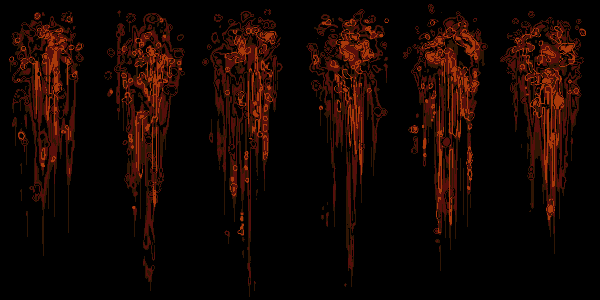

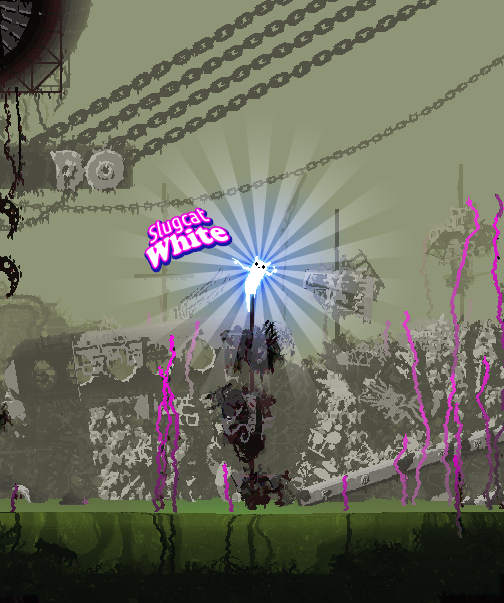
 Joar whipped up a properly poisonous looking palette for the Garbage Wastes region: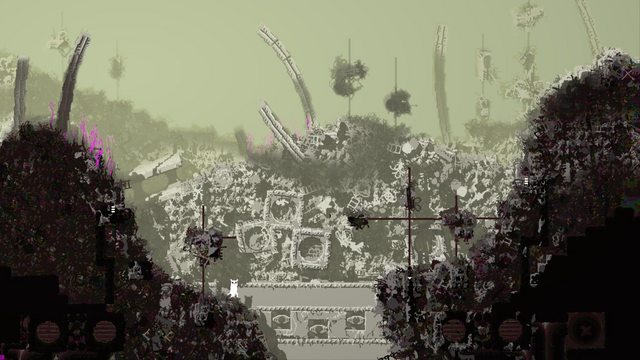
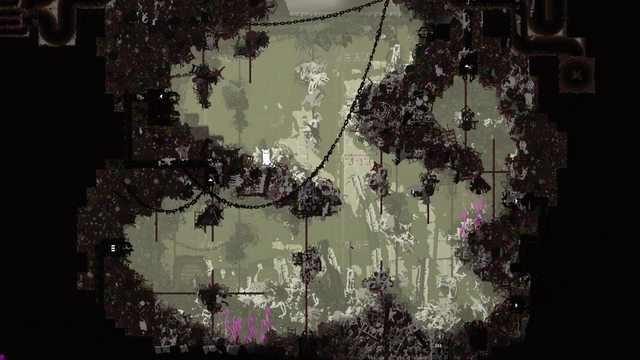


 next gen graphics... spit out from the lingo level editor and bloom lighting effect that was in the old version
  Really Nice to finally see it getting the polish we've been looking forward to though! I think there is quite a bit more than can be done too.
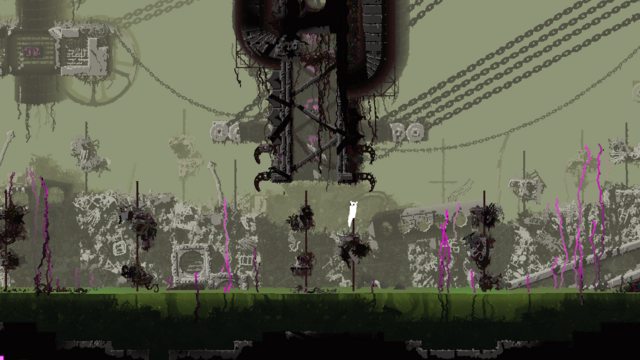
 ) and make sure everything blends/transitions nicely