@Caspar2000 Hey, so you can tell them apart by their shapes and sizes? That's good news then

But it might be a bit too ambiguous still? If you have full color blindness, feel free to stick around and interact as I work with the lizard cosmetics, your input would be really valuable

Work might be a bit slow for the next few though, because of travelling and PAX.
@tortoiseandcrow, yep, I feel the same, the one-color thing has something going for it. I was thinking that maybe secondary colors could work if reds have secondary colors tending towards yellow, while pinks have secondary colors tending towards blue - that way if the primaries overlap you'd still see a distinction between warm and cold in the overall color scheme. The idea about greyscale is really good, I should put them randomly on the grid in grayscale and see to what degree I'm able to identify them.
@RainWorldIsAwesome, awesome name there! If you could hold off on streaming just a little bit that would be great, I want to have a more in-depth talk with James about our stages of going public when I get over to Boston tomorrow!
@Crispy75, thanks for the well thought through input! I think the reason why they are hard to track has a strange sort of connectedness to the reason why I like the effect. Let me try to explain, haha!
In nature, very few things change color before your eyes - an apple changes color, but super slowly, quick color changes would be like, a chameleon? An octopus? Super rare. So it sort of makes sense for human eyes to be optimized for tracking same-color blotches that move. I remember from somewhere that our sight (on a very close-to-hardware level) mainly tracks edges between colors and dark/light areas, and movement perception is tied to this. Neurons in the image processing part at the back of the eye (my english fails me here) light up mainly on the edge between one blotch of color and the other, and it seems fair to assume that neurons next to these edge sensing neurons would "expect" to perceive the edge soon after, which would be how very low-level movement perception works. I'm blabbering here, but anyhow. Given that things changing color are rare in nature, it's not too far fetched to assume that this process "expects" the color edge to have the same colors, and that maybe edge/movement perception is somewhat impaired by stuff changing color as they move? This would explain the results of the article you linked.
That was (my fantasies) about reality, now let's move to fantasy land! I'm trying to make a Neon Lizard. I want to somehow hint at some sort of biotechnological qualities, but I don't want to have like, nuts and bolts sticking out of them. Whatever is going on here is more sophisticated technology than that... Maybe? This is really fuzzy stuff, but I know what mood I want to get across. So, stuff changing colors are rare in nature, but common in modern technology. Screens change color all the time. The reason why I like the color pulsing of the lizards is this - that it brings in an alien, or artificial, quality. It makes it obvious that this is not "just an animal," it's some stranger entity which doesn't belong to the world we know.
You say that "practiced observers" have an easier time seeing the flashing lights, and I think I'm certainly one of them at this point

That said, I personally don't have a super big problem tracking the lizards. I do experience some of it though, but I think that bit sort of enhances the experience - the lizards become a bit of an alien, unpredictable threat because of it, similar to some ghost in a horror movie. The (in my case very slight) difficulty to track them makes them more menacing, they move quickly through passages, all the while flashing, and with the next flash they might be closer than you expected.
Obviously "cool effects" never trumps actual playability, but I don't think it's
that bad trying to see where they are? If a lot of people think it is, let me know! Basically I feel that the "worst case scenario", which would be the brief moment when the lizard is entirely black, is still not unacceptable, the black silhouette is fairly well contrasted against the background, and the fact that it moves while the environments are static also helps.
When many lizards (especially of the same color) pile up in a fight, it is definitely impossible to keep them apart. But is it really super relevant to know which is which in such a situation? It becomes a "pile of danger", which you just shouldn't get near to either way, and that's pretty much all you need to know. If you're interested in which lizard won the fight or something like that, they will eventually separate and you can look at them as distinct entities again.
This is my reasoning! Nothing is set in stone obviously, and if this is indeed a big problem we'll have to tackle it. Just wanted to let you in on why I'm feeling good with this design decision as it stands.
 —
— 


 The last one had issues with the white background but this is a whole other level of weirdness


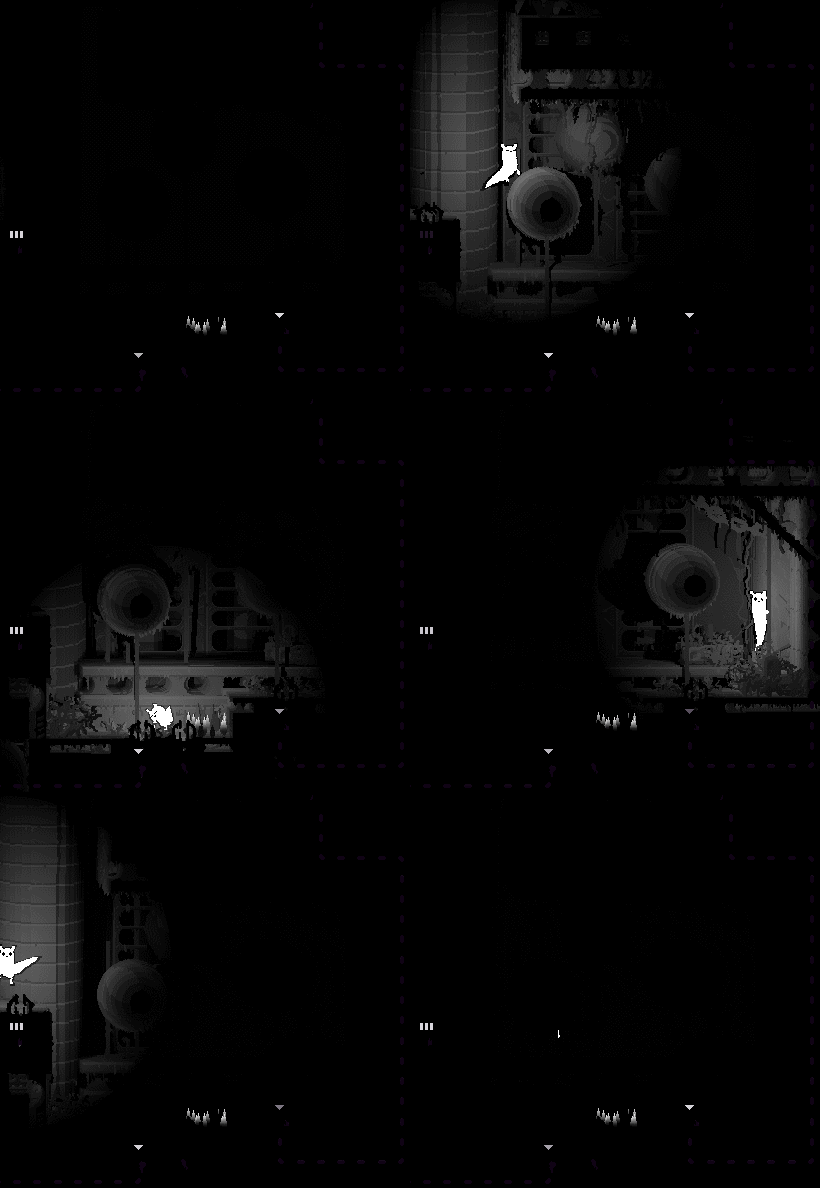
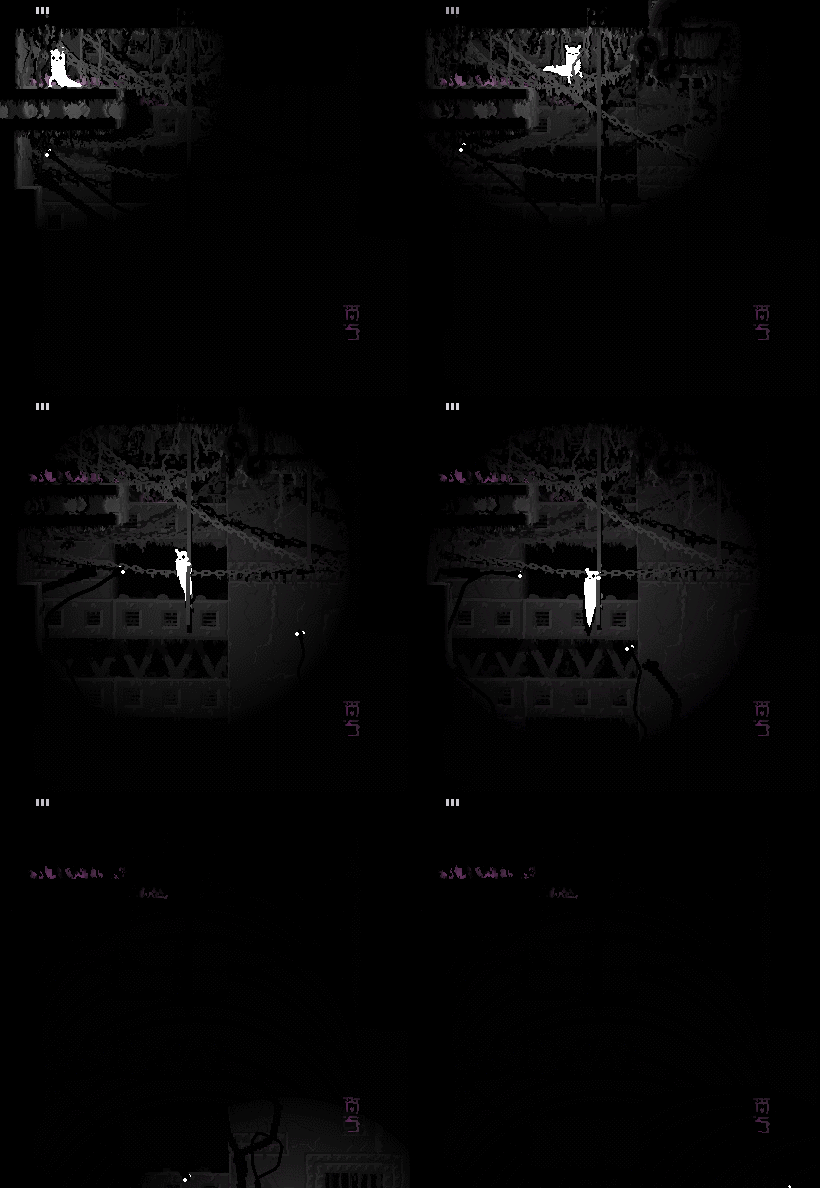
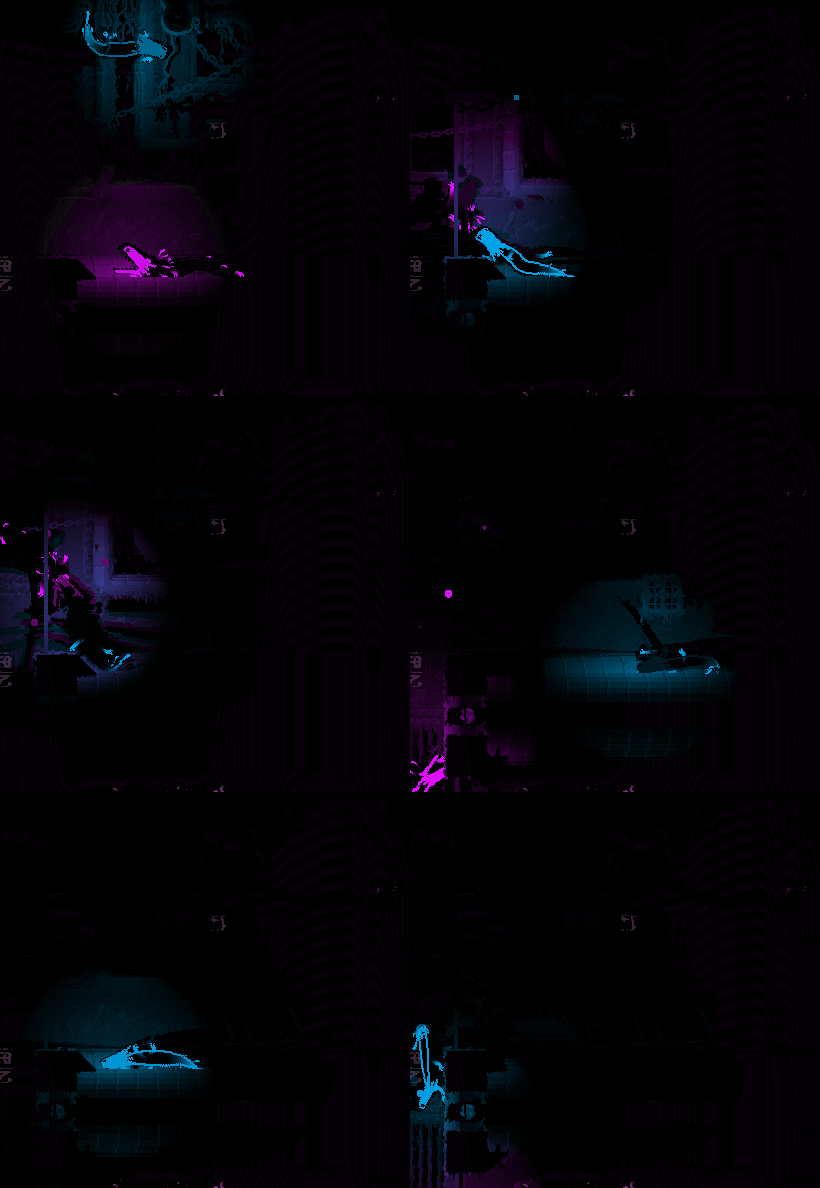
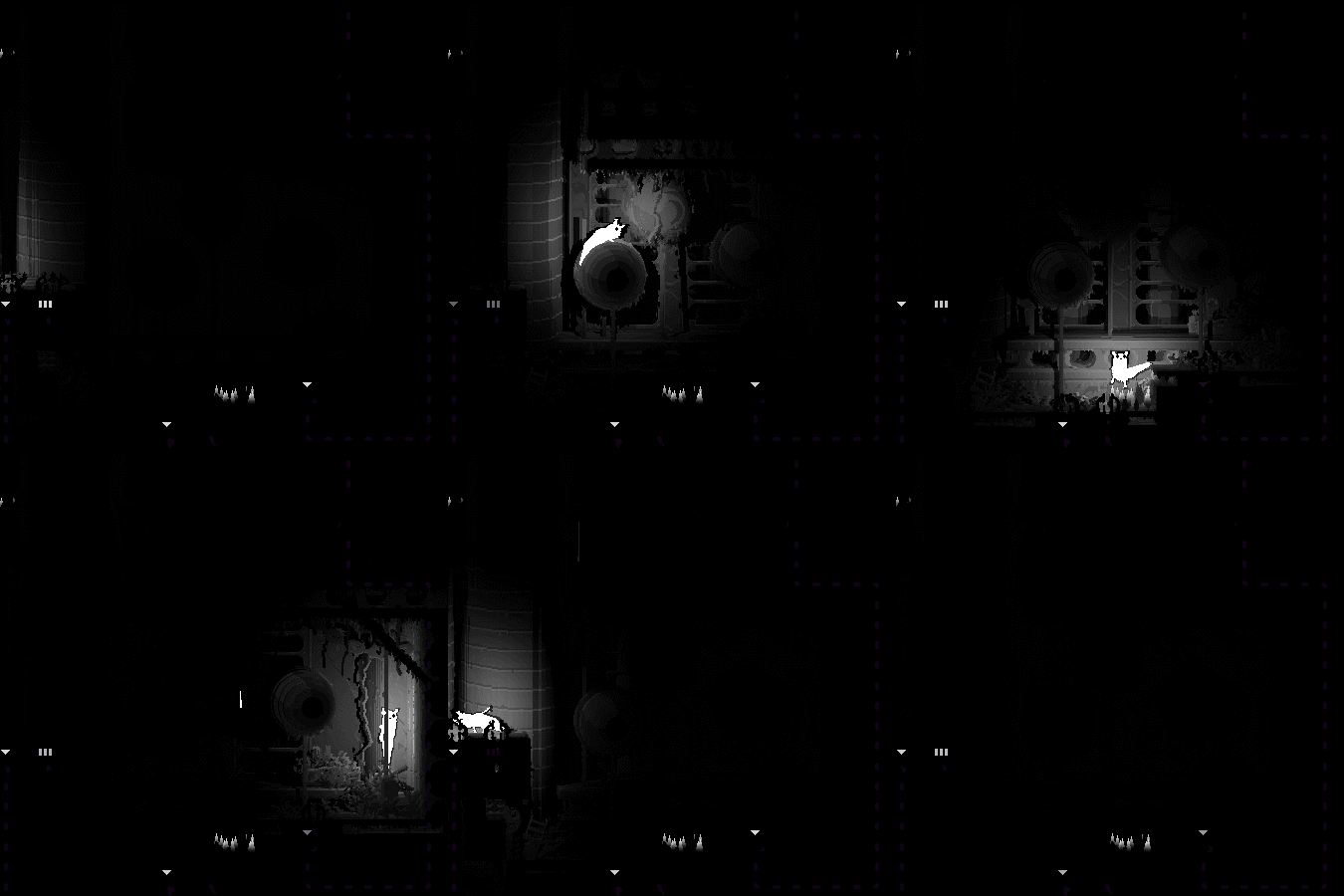
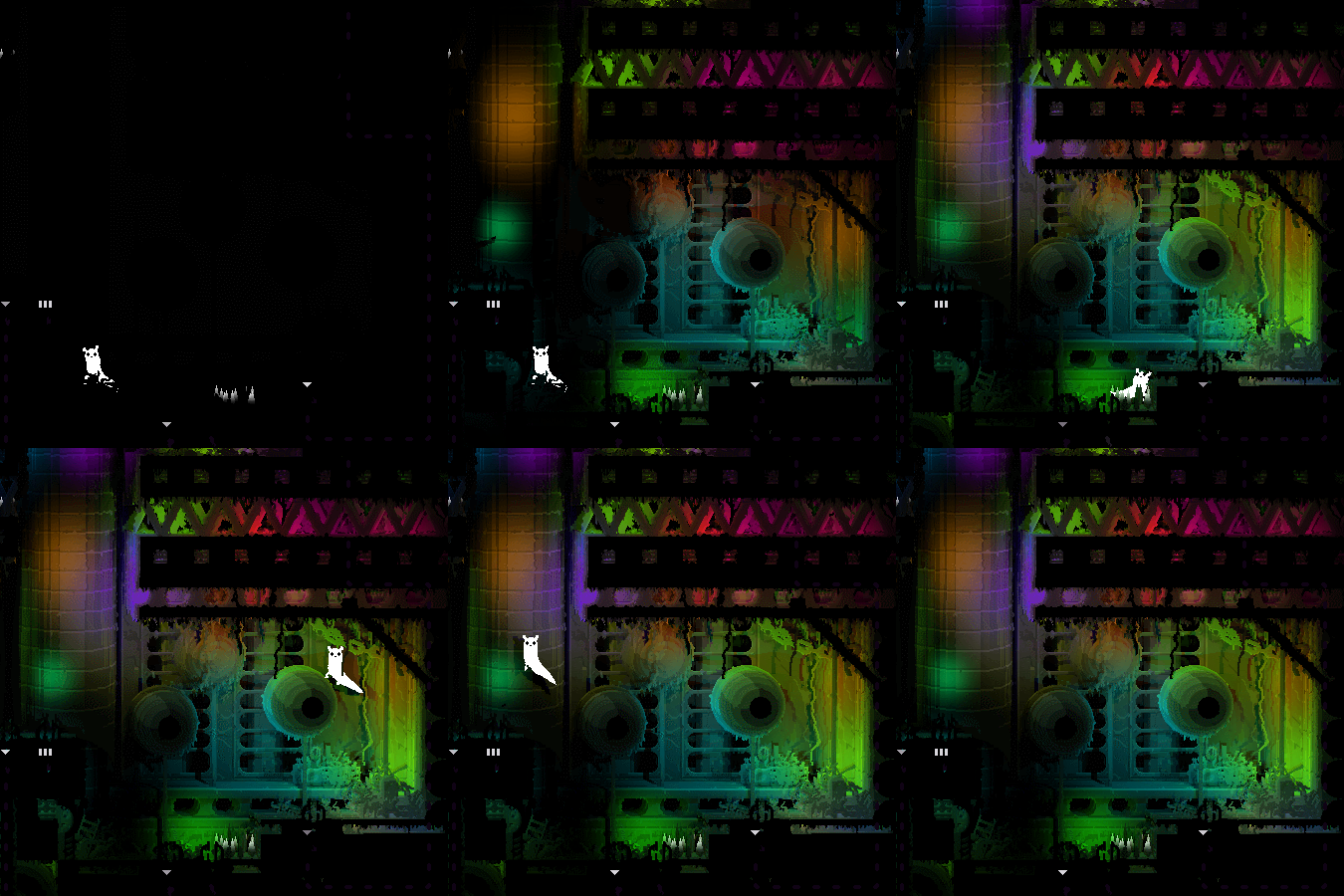
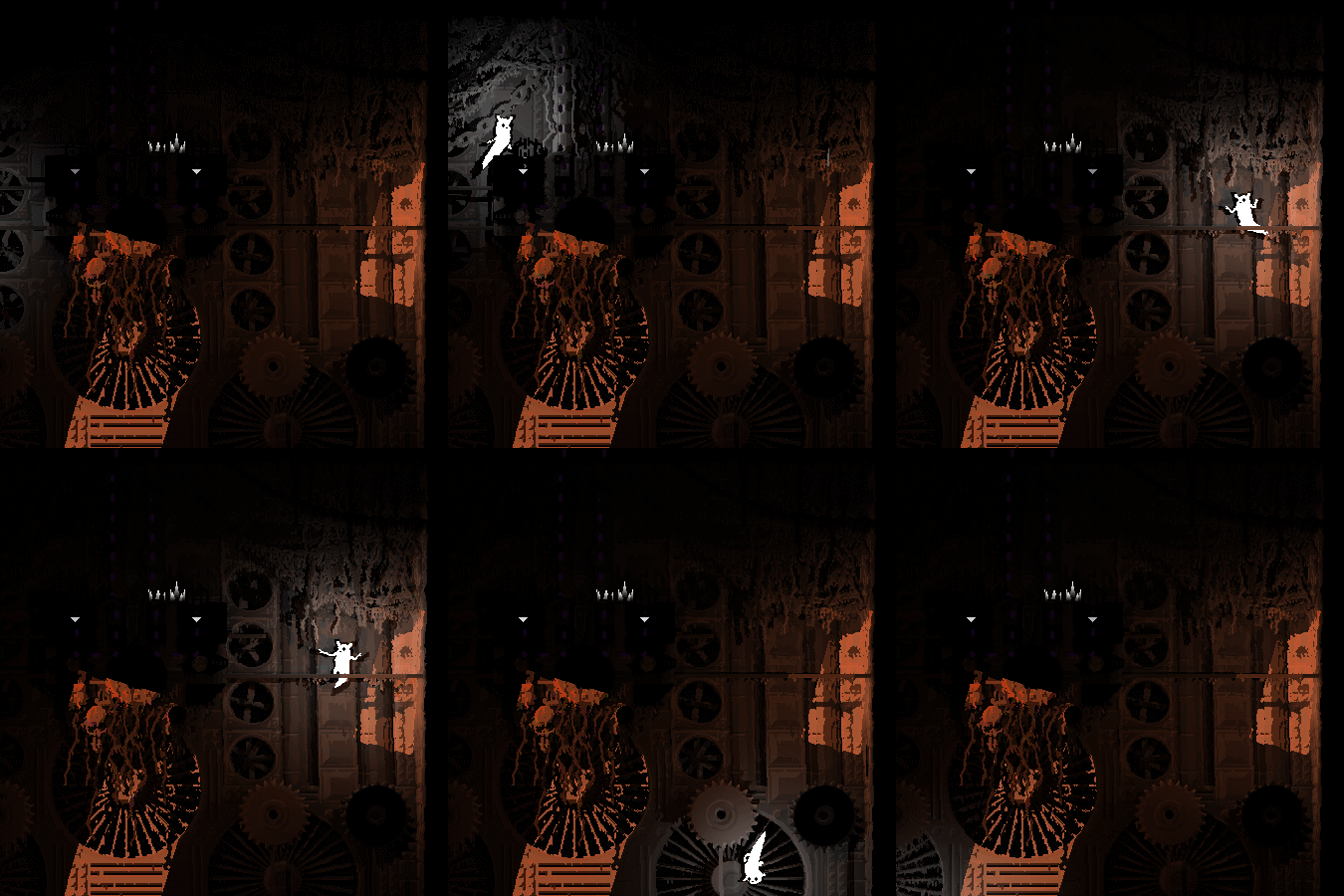
 What I do understand of what you say is that you're downsampling to lower resolutions and saving each resolution level as an overlay? But do you do this using a grab-pass on the entire screen? I don't write to a render texture to determine where there'll be light or not, each light source is just a sprite with a shader. This seems to be really fast as I don't need another render texture or even another grab pass, but it might come at a cost when doing stuff like that.